How to Do the Bicep Heart Pose — Timing and the AI Trend
Updated November 2026
The bicep heart trend is a short selfie clip: you flex one arm, then curve the other hand into half a heart against the bicep so the arm and hand make one heart. Below is how to do bicep heart yourself, how a typical video flows, and how people make AI versions from a single photo.
Want one starring you? Try it with one photo →
What the bicep heart trend is
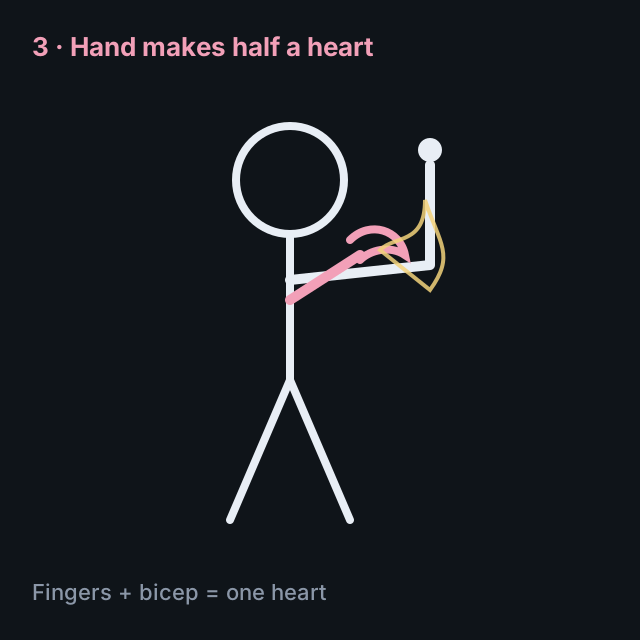
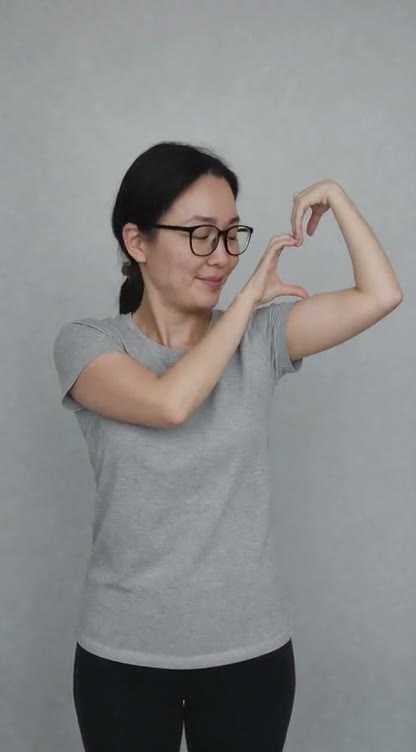
Unlike dance challenges, this one is a single pose. You flex one arm (fist near the head), bring the opposite hand across, and form half a heart against the flexed bicep — fingertips over the top, thumb under — so the muscle fills the other half. People usually hold a small smile into the camera. You do not need big arms; the hand does most of the outline.
Clips are often captioned with a short hook such as “Have you ever heard of a bicep heart?” and tagged #bicepheart. The same move shows up on TikTok, Instagram Reels, YouTube Shorts and X.
How to do the bicep heart pose
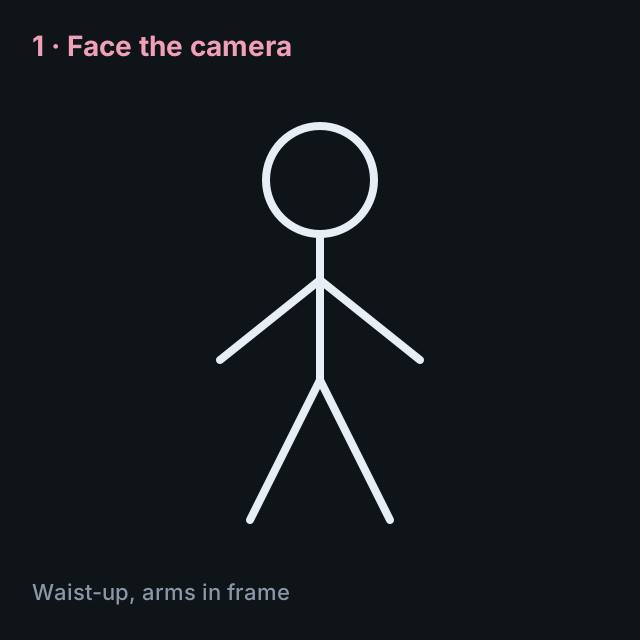
Here is a clear way to learn the bicep heart pose in four beats. Keep the camera at chest height, face forward, and leave both arms in frame.
Face the camera. Stand or sit waist-up, arms relaxed and fully visible. Soft, even light helps.
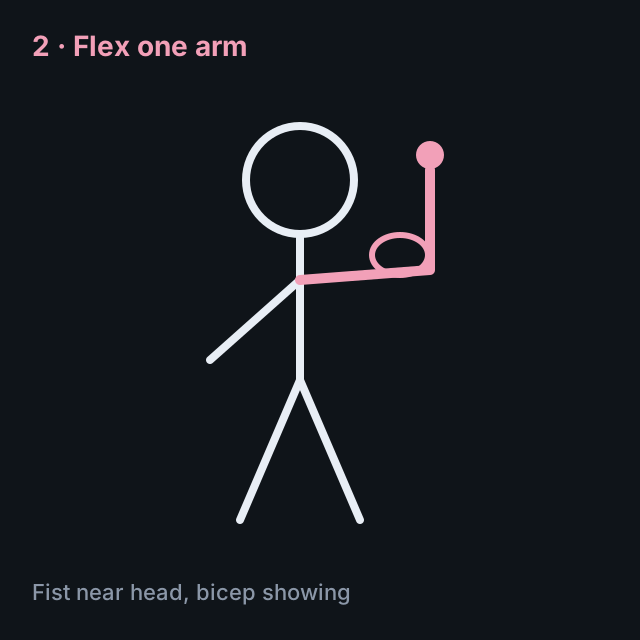
Flex one arm. Lift one arm into a classic flex: upper arm out, forearm up, fist near the head. Keep the elbow inside the frame so the bicep shows.
Make half a heart with the other hand. Bring the free hand onto the flexed bicep. Curve the fingers over the top and tuck the thumb under so the hand is only half a heart — the arm completes it. Avoid a full two-hand heart in the air; that is a different gesture.
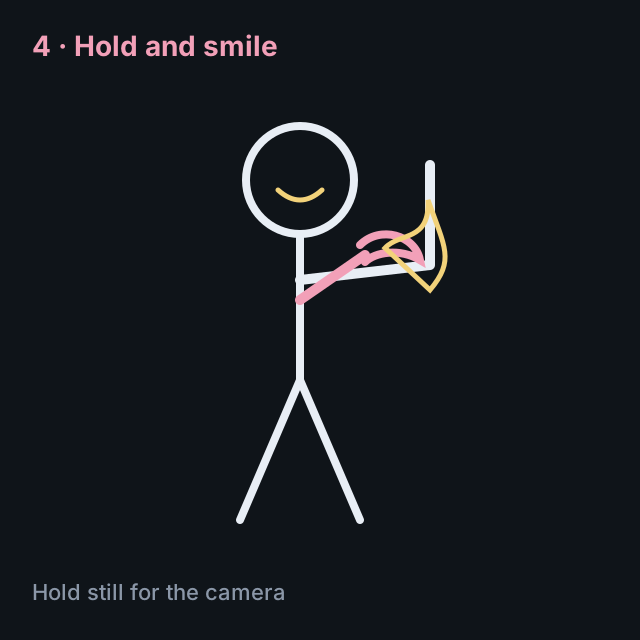
Hold and smile. Freeze the finished heart for a few seconds, smile at the camera, then you can glance at your hands and look back. That hold is what most clips end on.
Common mistakes
These four slips hide the heart or flatten the pose on camera. None of them mean you cannot do it; they just make the shape harder to read.
- Making a two-hand heart. Both palms meeting in the air is not this pose. Only one hand should curve against the flexed bicep, so the muscle can supply the other half. If the free hand leaves the arm, the outline disappears and you have switched gestures.
- Palms covering the face. The flexed fist should sit beside the head, not over it. A palm that crosses your face hides the smile and the top curve of the heart, so leave a visible gap between the fist and your cheek.
- Light that is too dark or backlit. A bright window behind you, or a dim room, turns the arm into a silhouette and the hand into a blob. Face a window or a lamp so the front of the bicep and the fingers are evenly lit.
- Loose short sleeves hiding the arm line. A baggy sleeve bunches over the muscle and breaks the outline from shoulder to elbow. Roll the sleeve up, push it past the bicep, or wear something fitted enough that the curve stays visible.
Adjusting for body type and camera
Small changes in how you stand and where you put the lens make the same pose read more clearly on a phone screen.
- Thinner arms. Use the hand as the outline: lift the fingertips a little over the top of the bicep and tuck the thumb firmly underneath so the gap is a clean heart. A light touch is enough; pressing hard flattens the muscle. The C-shape of the hand is what people notice first.
- Slightly low camera versus eye level. A lens around chest height, just below your face, shows more of the flexed bicep and the hollow of the heart. Straight-on eye level can flatten the arm against your torso. Shooting from above shrinks the muscle and can hide the hand, so keep the phone level or a touch low.
- Vertical 9:16 framing. Hold the phone upright. Leave a little space above your head, keep both elbows inside the frame, and sit the finished heart in the middle third. Cropping an elbow or the top of the fist cuts the shape in half on TikTok, Reels, and Shorts.
Solo and duo versions
Most clips are one person. A two-person version exists too, and the hands work differently in each.
- On your own. Stay square to the camera, keep both arms in frame, and hold the finished heart long enough to smile into the lens. Glance down at your hands if you like, then look back. Check that the free hand is only half a heart and that your face stays visible beside the flexed fist.
- Two people facing each other. Each person flexes the arm closest to their partner and reaches the free hand across so the two hands meet on, or just above, the pair of biceps — fingertips of one hand meeting the thumb side of the other. Do not make a floating heart away from the arms. Stand close enough that both faces and both flexed arms stay inside a single 9:16 frame.
Timing: how a typical clip flows
Many short versions run about 5–8 seconds. A common flow matches the steps above: a beat of facing the camera, a beat to flex, a beat to set the hand, then a hold on the finished heart. AI versions of the same idea often land on a silent 7-second 9:16 clip so you can add any sound when you post.
Why AI versions are popular
Filming a clean take needs good light, framing, and a few retries. Turning one existing front-facing photo into a short clip skips the reshoot, which is why AI versions spread quickly alongside real ones. If you want that path, make your bicep heart video on the homepage — upload a photo, check free stills, then buy the finished MP4 when you are ready. See pricing for credit packs.
Make yours
Ready to star in a clip without practicing on camera? Add a clear shot with your face and arms in frame on the homepage, preview the free stills, then unlock the MP4.
Questions
What is the bicep heart trend?
It is a social-media pose challenge: flex one arm and use the other hand to form half a heart against the bicep so the arm and hand make one heart. Clips are short, often tagged #bicepheart, and appear across TikTok and other short-video apps.
Where did it come from?
No single creator is confirmed as the inventor. Reporting in early November 2026 (including Box Life Magazine and other lifestyle coverage) places #bicepheart on TikTok around late October 2026, with early widely shared posts from creators such as @hunnybakes, @mckennacrisp and @kavithageorge. Some accounts say the pose circulated as a gym joke on X first; we have not independently verified the first post, so treat exact “day one” claims as reported, not settled fact.
Do I need big arms for the bicep heart pose?
No. The hand draws most of the heart; a light flex is enough. That is part of why this pose works for many body types.